Tango show in the Avenida de Mayo café
One hour with dancers, singers and musicians in the historic café. Dates are few, so try the calendar before you plan around it. Sold as wheelchair accessible; a drink or meal is not promised.
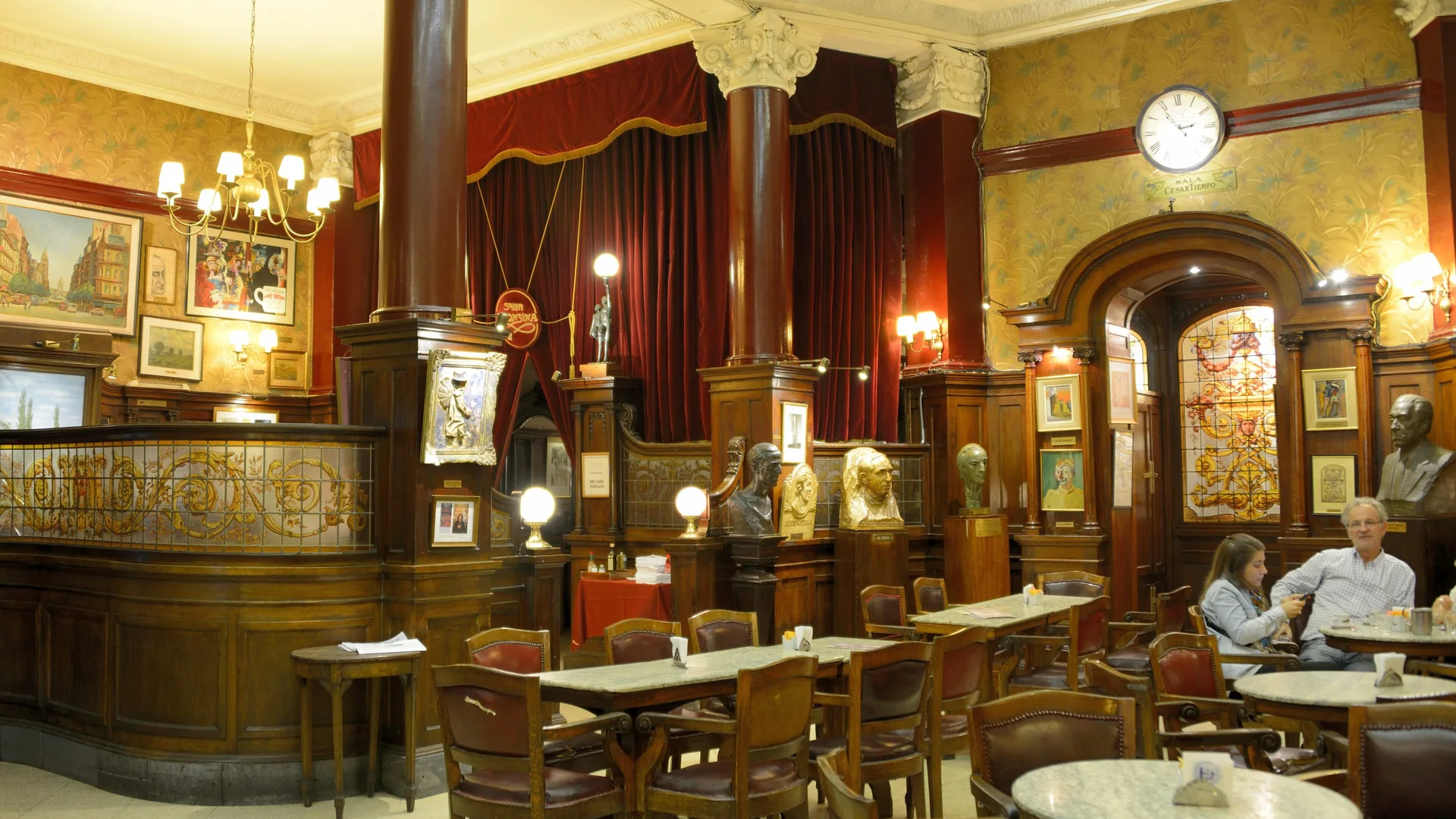
Avenida de Mayo · Buenos Aires
Dancers, singers and musicians perform an hour of tango classics in the historic café on Avenida de Mayo.
Dates for this show are few, so check the calendar before you plan your evening.
The answer, then the detail
Worth it, if a date opens and an hour of tango in an old coffeehouse is what you are after. The score is excellent from a few dozen reviewers, and the room does half the work. The real obstacle is the calendar: this show is usually unavailable, so look before you build a night around it. If nothing opens within your stay, book a different tango evening and visit the café for a coffee instead.
One hour of tango classics played, sung and danced by professionals inside a coffeehouse that has served Buenos Aires since the nineteenth century. It is close, short and a good first taste of the art form, and you can eat wherever you like afterwards.
A dinner show, a late night, a class or a dance you join. Nothing on the booking page promises a drink or a meal, and the running order is not yours to choose. If you want a three-course evening with a big cast, this is the wrong ticket.
What you are listening to
Tango is built from a few recognisable parts, and knowing them makes an hour go further. These are the parts of the tradition as English Wikipedia describes them, not a promise of who or what plays on your night.
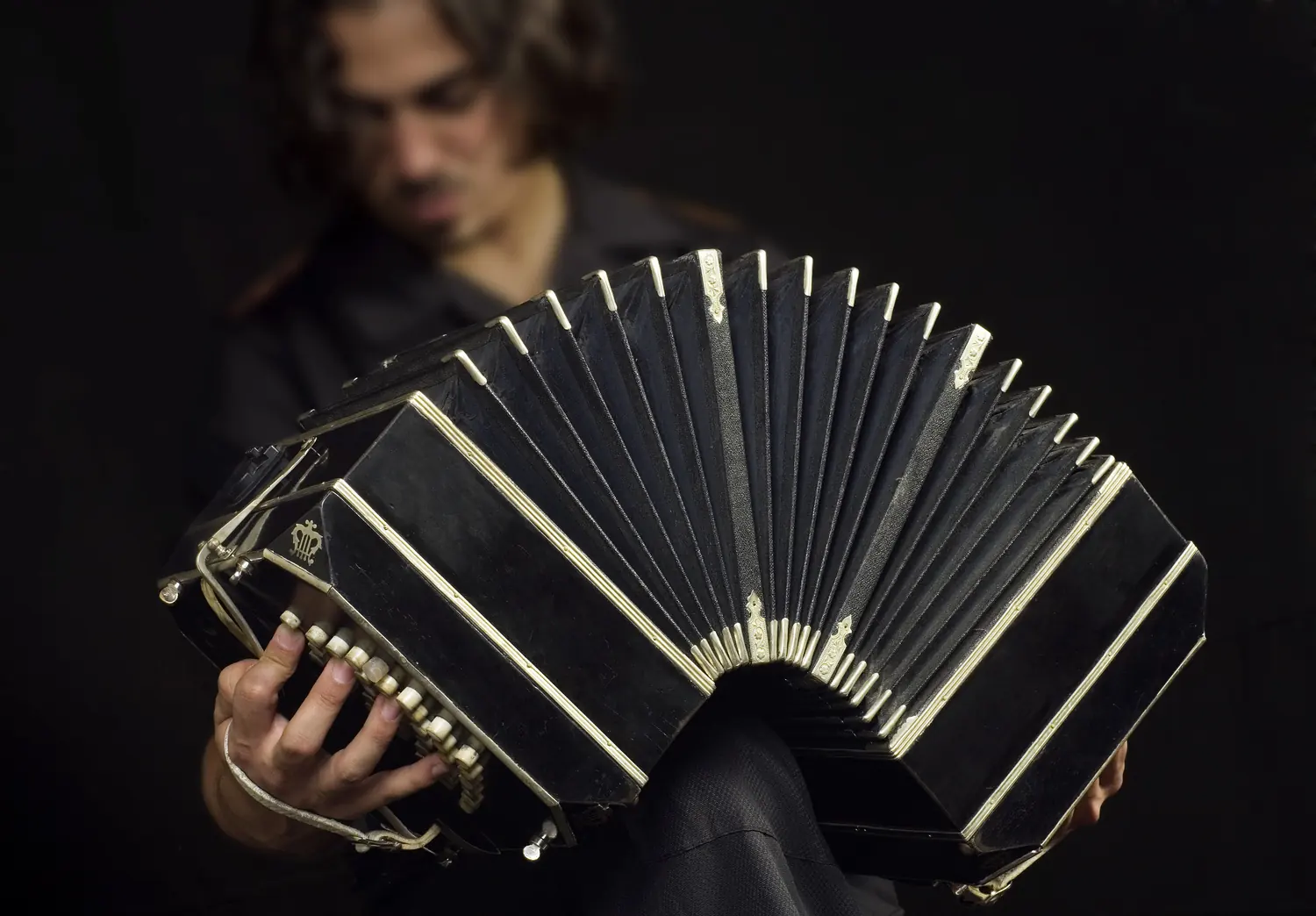
A concertina worked between the hands, it pushes and pulls air across metal reeds, and each button gives one note on the push and another on the pull. It probably reached Argentina around 1870 in the baggage of German and Italian emigrants and sailors, although nobody documented exactly how. The left hand sounds nasal and muted, the right bright and sharp.
Early players carried flute, guitar and violin trios from place to place, and the fiddle stayed when the bands grew. Vicente Greco is credited with fixing the sextet of two violins, two bandoneóns, piano and double bass.
These two keep the floor steady. In the 1920s, bandleaders such as Roberto Firpo and Francisco Canaro dropped the flute from the line-up and brought in the double bass. A full orquesta típica sets a string section and three or more bandoneóns on top of this rhythm pair.
A tango may be purely instrumental or carry a vocalist. Carlos Gardel helped shape tango canción during the 1920s, and the lyric tradition leans towards nostalgia, sadness and lost love. You do not need Spanish to catch the mood of it.
Dancers call their hold the abrazo. It flexes from chest-to-chest closeness to a V shape to an open frame. Stage dancers tend to open it up, because the extra space lets them add lifts, kicks and drops that a crowded social floor would never allow. That difference explains why a show looks unlike a dance hall.
Older than tango and counted among its ancestors, milonga has been called an excited habanera. Danced, it is a quicker, more playful walking step with fewer pauses and a rustic humour. Confusingly, the same word names the social dance event where people go to dance all three forms.
The tango waltz is the third member of the family, and a social dance event's music is mainly tango, vals and milonga. It is easy to spot by ear, because the pulse rolls in three instead of the two or four of a tango.
Sources: English Wikipedia articles on the bandoneon, tango music, orquesta típica, Argentine tango, tango, Carlos Gardel, milonga (music), milonga (dance) and milonga (dance event). The people on stage and the pieces they play are their own choice.
Read before you pay
This show is usually unavailable. Say it plainly to whoever you are travelling with, check the calendar first, and do not build a one-night stay around it. If a date opens that suits you, take it, because cancelling costs nothing until 24 hours ahead.
Buenos Aires has plenty of other tango evenings, from small rooms to large dinner shows, and many run far more often than this one. If nothing opens during your stay, book one of those and call at the café by day.
An evening can have two sittings of the same show. Choose carefully when booking and read the voucher, since one past guest was confused about which slot the ticket covered. The confirmation shows the time.
The inclusions are not spelled out, so plan to pay for anything you order and to eat before or after. Treat this as a ticket to a show, not a night out with everything thrown in.
The option carries a private-group label without saying what that changes in the room. Read the option text on the booking screen and, if it matters to you, ask before you pay.
You will hear tango classics, with dancers, singers and musicians. Which pieces, and who performs them, is up to the people staging the show on the night.
The café, in dates
The show's selling point is the building's long memory. Each date here comes from the English Wikipedia articles named underneath.
1858
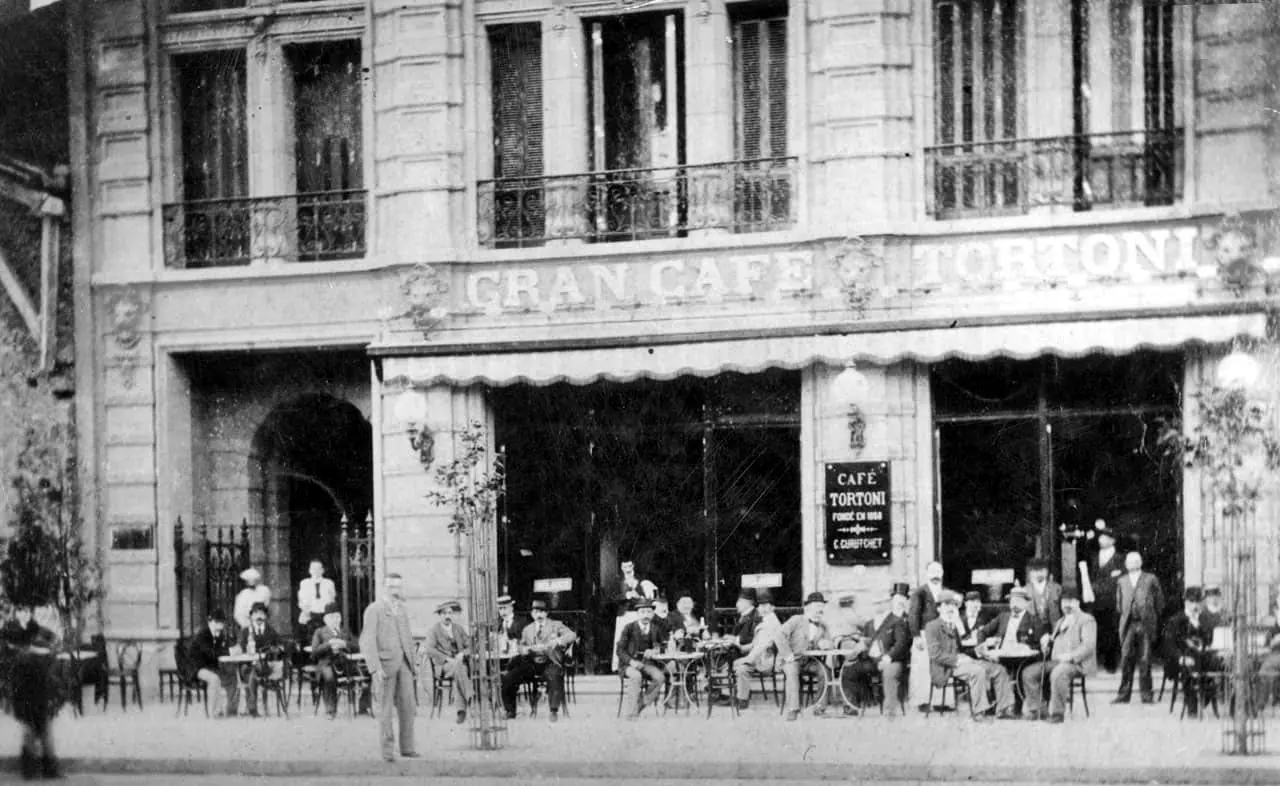
A Frenchman surnamed Touan opens a coffeehouse and names it after a Parisian café on the Boulevard des Italiens. The first address is on the corner of Rivadavia and Esmeralda.
1880
The café takes up its present site, but its entrance faces Rivadavia, on the other side of the block. The grand avenue out front has not yet been cut through.
1894
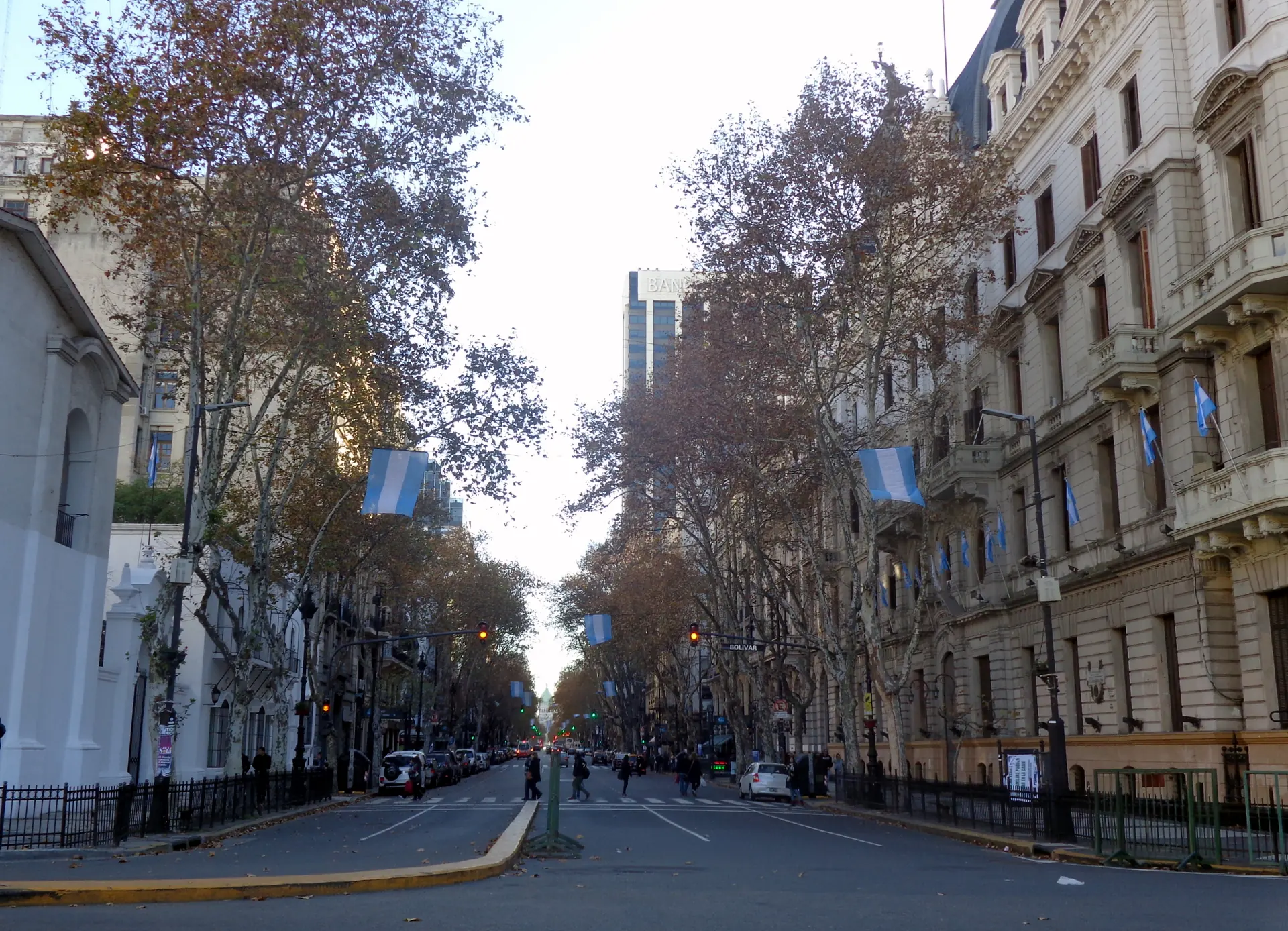
Avenida de Mayo opens after nine years of work, driven through existing city blocks from the Plaza de Mayo towards the Congress on Mayor Torcuato de Alvear's initiative.
1898
An entrance opens on Avenida de Mayo and the architect Alejandro Christophersen redesigns the façade.
1926
An arts circle sets up in the basement and lasts until 1943. Its visitors include the poet Alfonsina Storni, Jorge Luis Borges, the pianist Arthur Rubinstein and the painter Benito Quinquela Martín.
2009
UNESCO approves a joint proposal by Argentina and Uruguay to add tango to its Intangible Cultural Heritage lists, recognising the dance of the Río de la Plata.
Today
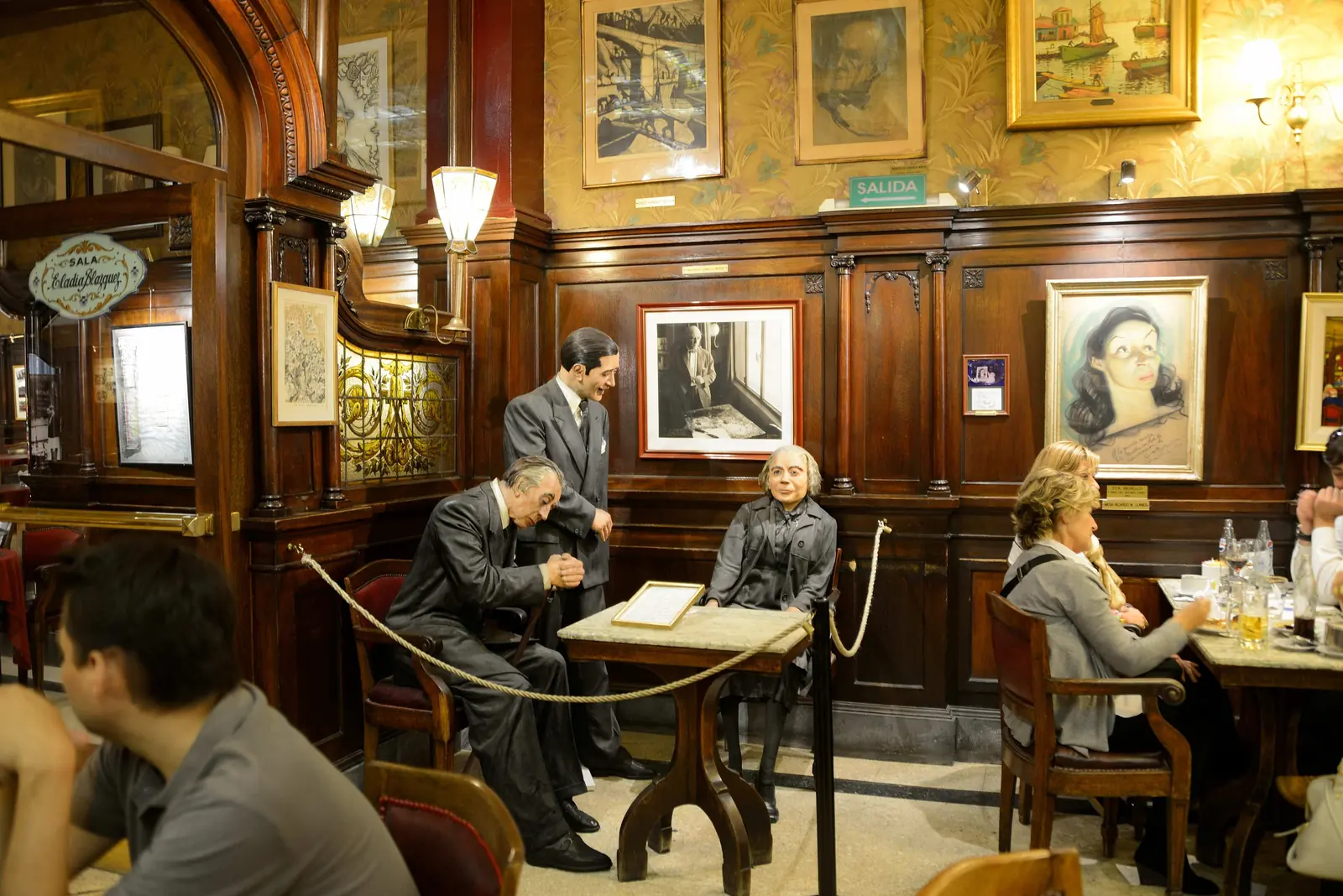
The basement now hosts jazz and tango artists and book and poetry contests. The café keeps the decoration of its early years, along with a library and, at the back, billiards, dominoes and dice.
Sources: English Wikipedia's articles on the café, Avenida de Mayo and tango. The show's sellers bill it as the oldest café in Buenos Aires; that superlative is theirs.
From calendar to curtain
Most of the work on this ticket happens before the night, because the difficult part is the date.
Today
Enter your dates in the booking calendar first. This show is usually unavailable, so a blank result is normal, and it is worth trying the days on either side.
If it opens
More than one slot can run in an evening. Choose the one you want when you book and read your voucher afterwards, since mixing up the two is the one confusion that has come up.
After booking
Reserving now and paying later is allowed, and cancelling costs nothing until 24 hours ahead. That makes it safe to grab a rare date and sort the rest of your trip around it.
On the night
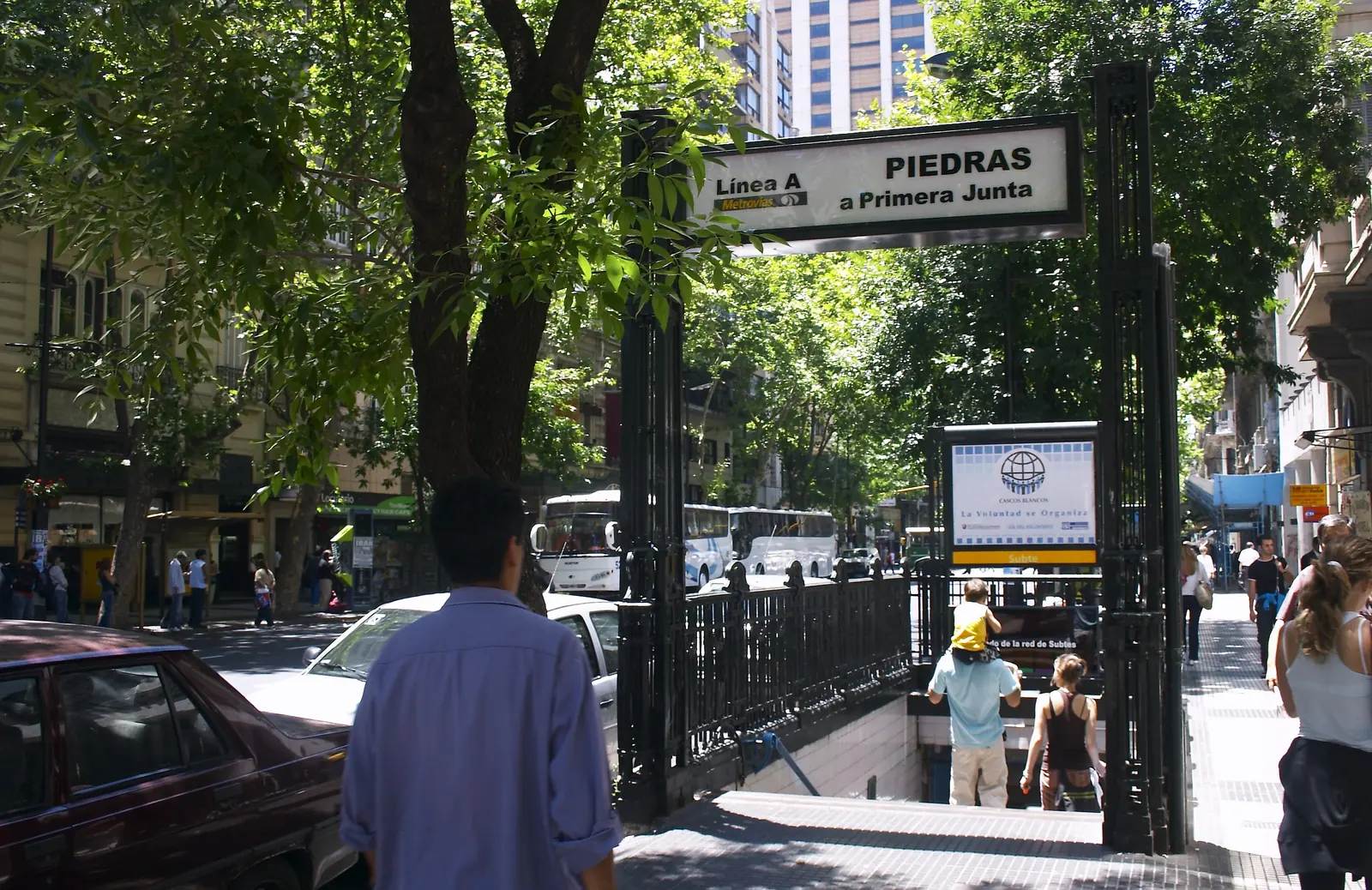
Piedras, on Line A, sits under Avenida de Mayo and one of its entrances is next to the café. Your confirmation shows the time, and it is the place to check where to go once inside.
Afterwards
Dinner is not promised, and the show lasts an hour. Book a table somewhere nearby or stay for a coffee at a marble table if the room is open to you.
Inside this ticket
What is firm about this ticket, and which parts stay vague.
Two ways to spend a Buenos Aires hour or two
Around the marble tables
The long room and its glass, a real milonga across town, and the two barrio and cemetery plans that pair well with a night of tango.
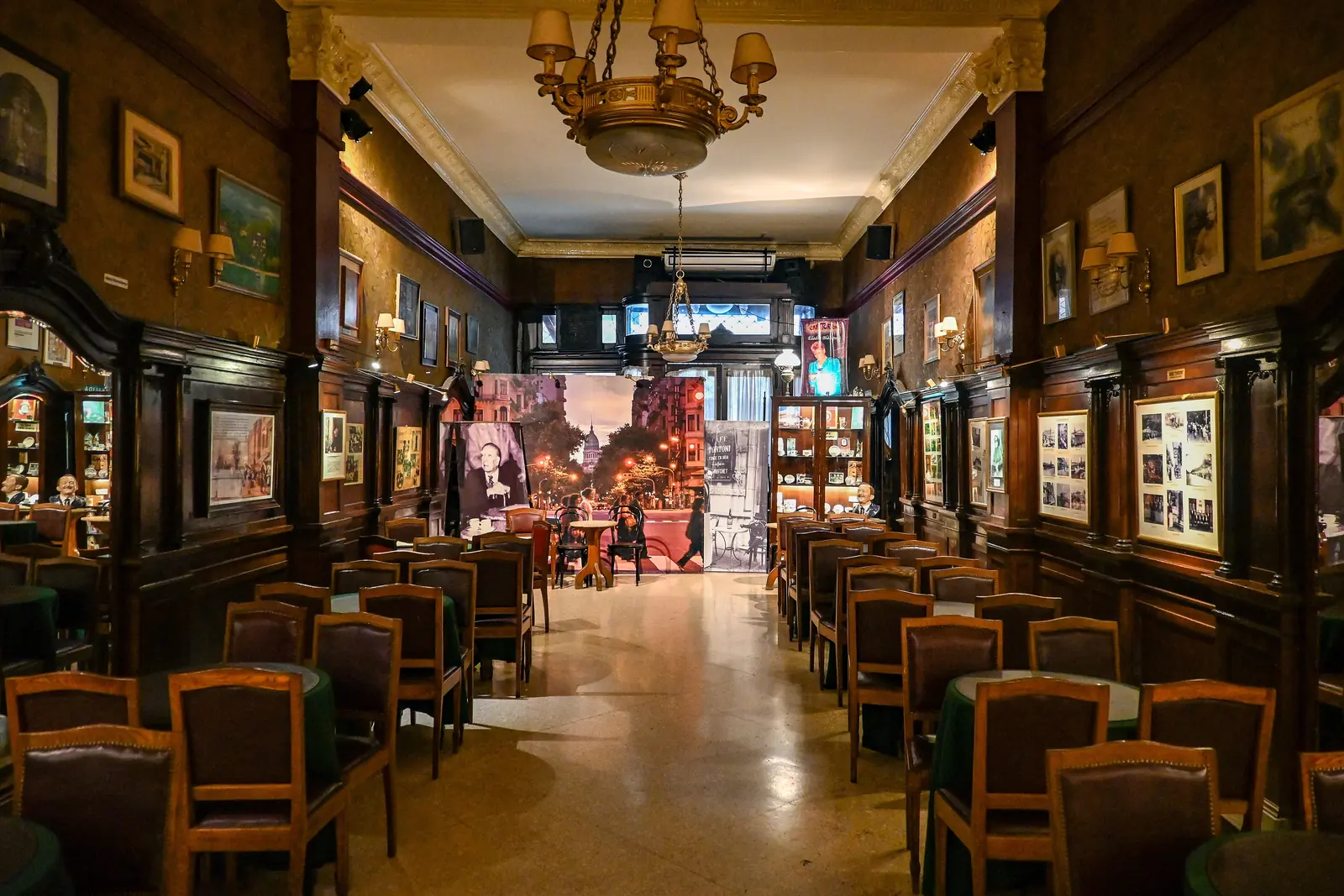
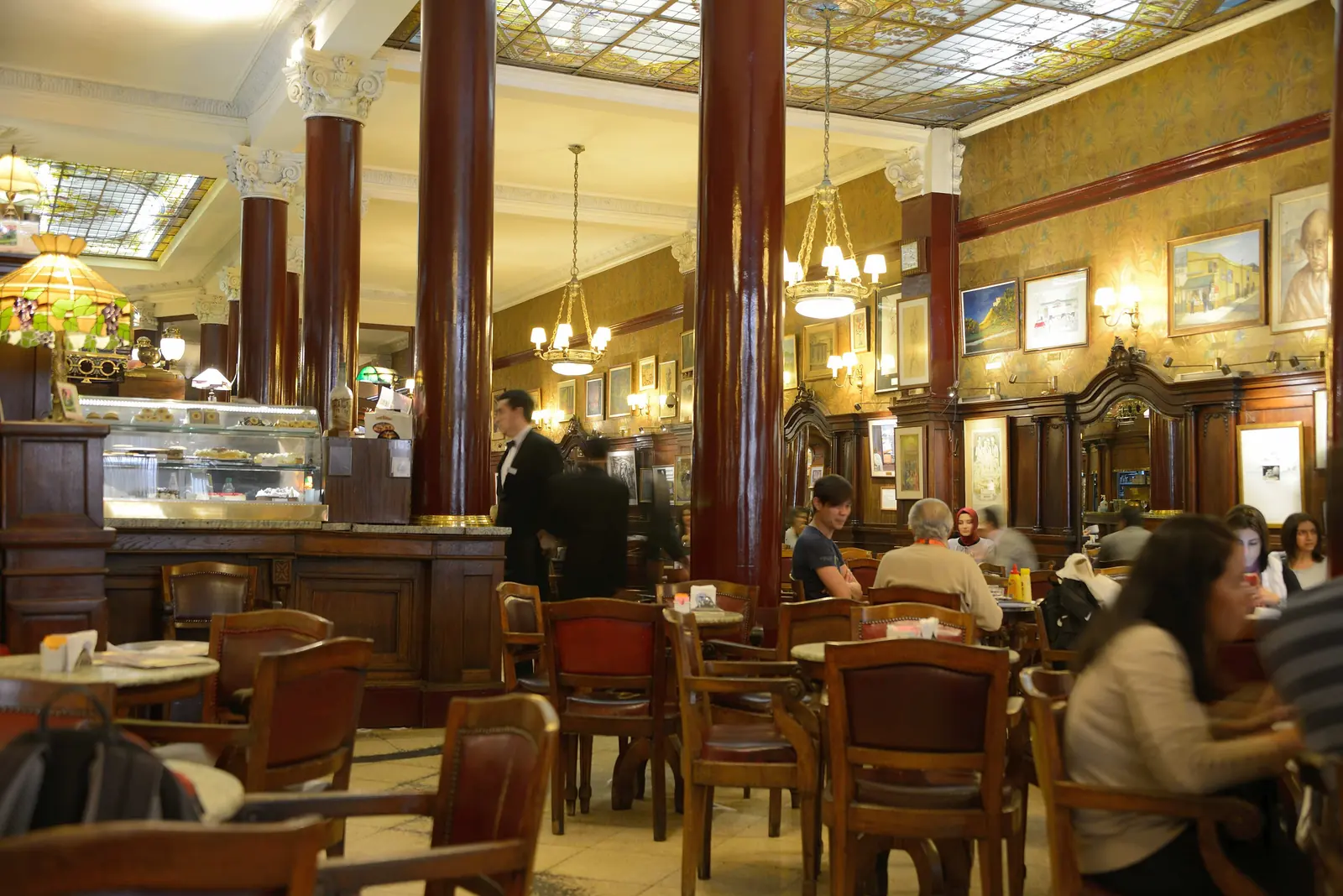
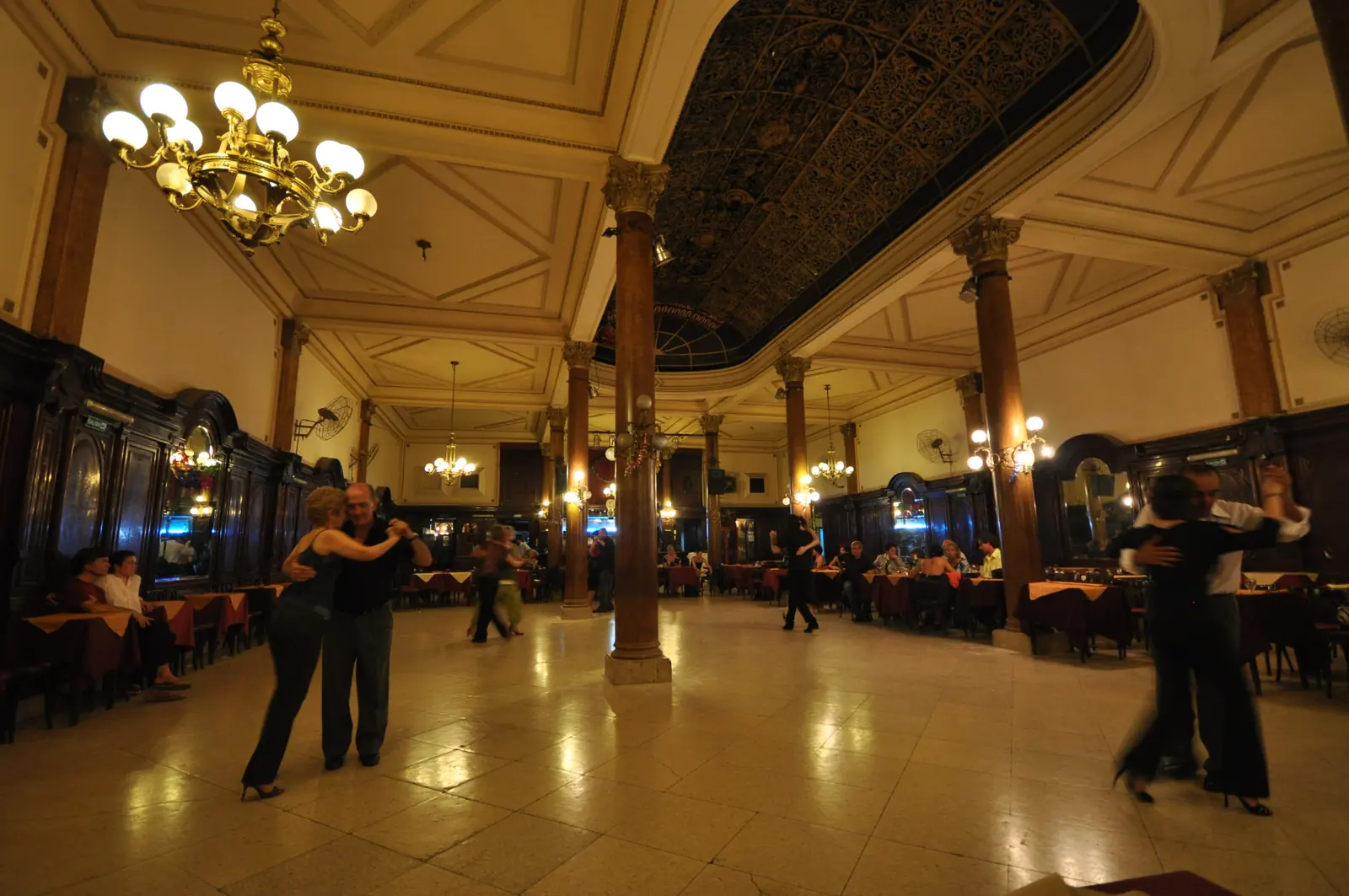
The café hour, and three plans for your daylight
The show comes first. Beside it sit the La Boca walk it is weighed against further down, a guided morning among the Recoleta vaults, and a long tasting walk through Palermo.
One hour with dancers, singers and musicians in the historic café. Dates are few, so try the calendar before you plan around it. Sold as wheelchair accessible; a drink or meal is not promised.
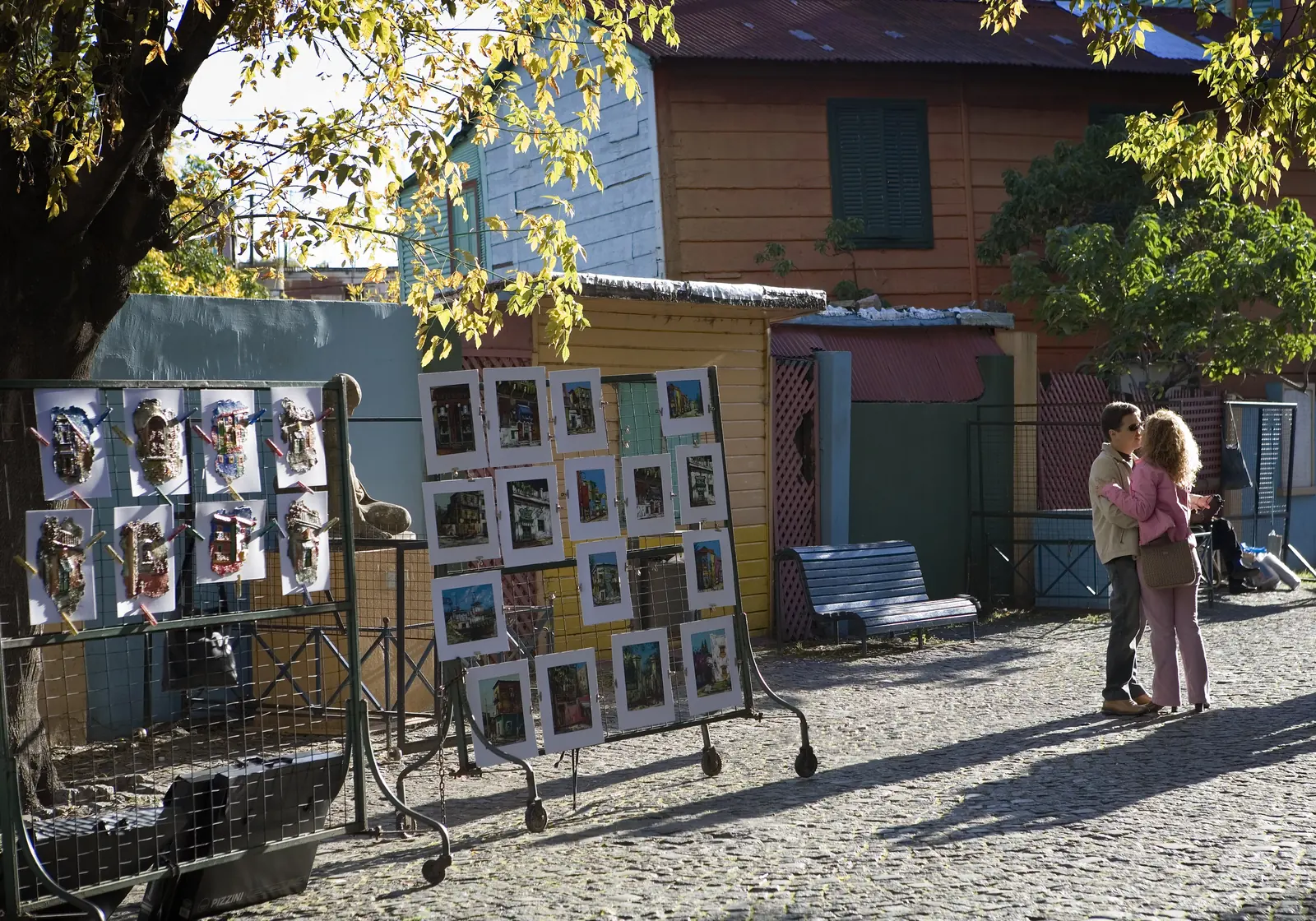
Two hours on foot in English through the old port barrio, its artists and its immigrant history, with a local guide. Sold as wheelchair accessible. This is the walk weighed against the show below.
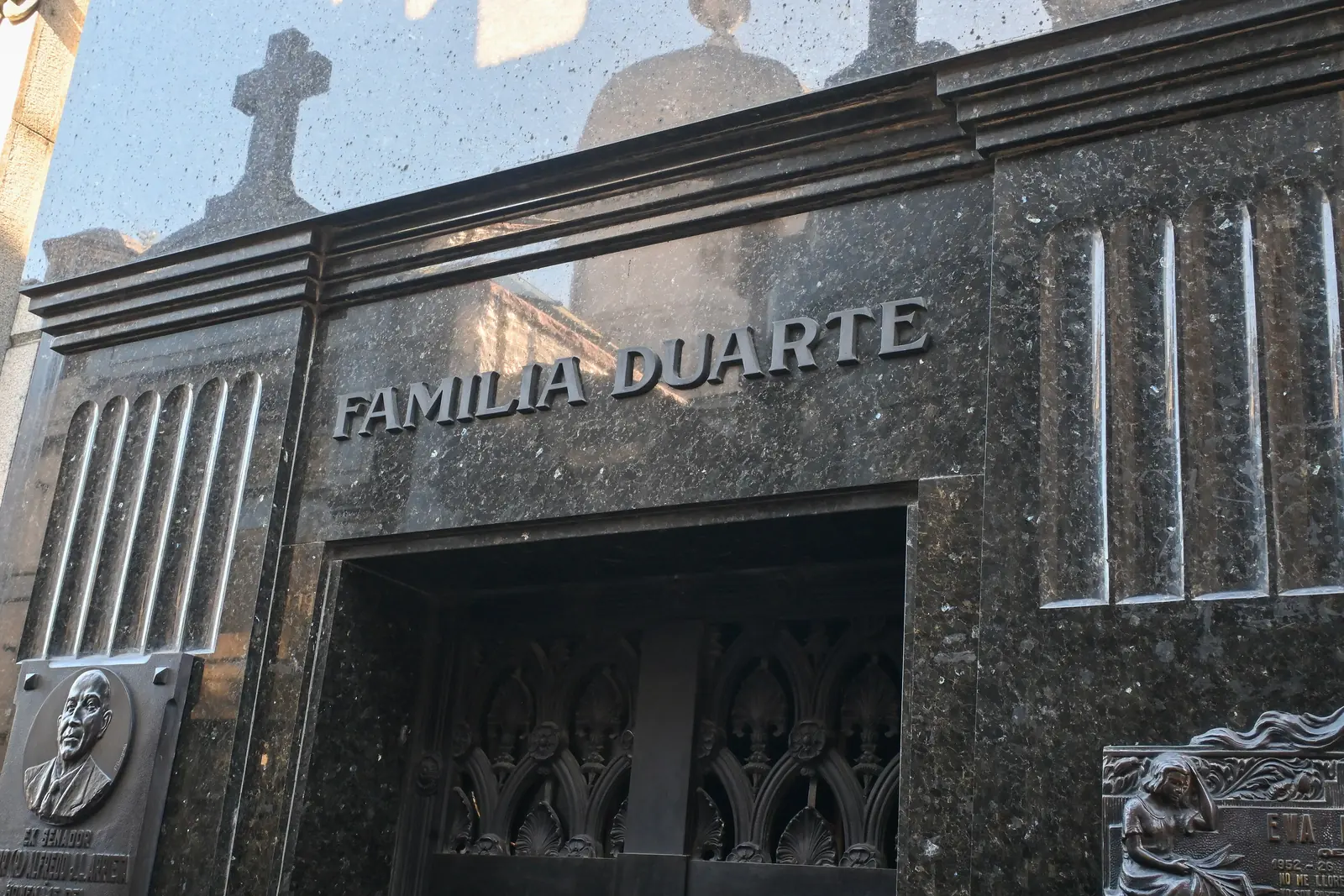
Two hours in English among the carved vaults of the city's first public cemetery, with famous mausoleums such as Eva Perón's on the route. A daytime plan that sits easily beside a night of tango.
A small-group tour of three and a half hours through Palermo, tasting Argentine food and wine with a guide, including a stop at a traditional bodegón. The filling option, if the show leaves dinner to you.
Other bookable Buenos Aires plans
Before you commit an evening
FAQ
It is worth it if a date opens and you want a short show in an old room. Getting a date is the hard part: this show is usually unavailable, so open the calendar before you plan anything else.
Try the days on either side, then move on. Buenos Aires has many other tango evenings, large and small, that run more often. Book one of those for the music and visit the café by day for a coffee.
Do not count on either. The inclusions are not spelled out on the booking page, so plan to pay for anything you order and to eat before or after the hour.
It lasts one hour. An evening can carry more than one slot, so you pick yours when you book. Your confirmation shows the time.
The option carries that label, but what it changes in the room is not spelled out. Read the option text before paying, do not assume the room is yours alone, and ask if it matters to your plans.
The show's sellers bill it that way. English Wikipedia records that it first opened in 1858 and moved to its present block in 1880, so the claim is theirs and the dates are the firmer ground.
No. Dance and instrumental pieces need no translation, and a sung tango's mood comes across without the words. If you want to follow the lyrics, a little reading beforehand helps.
It is sold as wheelchair accessible. The building is old, so raise any access need at booking and wait for a reply before relying on it.
Take Line A to Piedras. The station lies under Avenida de Mayo, and one of its entrances is next to the café.
Yes. There is no charge until 24 hours before the show, and payment can wait, which helps when dates are this scarce.
No. It is one hour in a coffeehouse, with no dinner promised. Dinner shows take most of an evening and bundle a meal with a bigger production. Choose by whether you want the room or the full night.
No. This independent guide stands apart from the café and the show's producers: it is neither party's website and is not affiliated with them. Reservations started on these pages finish on GetYourGuide.